
5 PR tools for small teams: research, pitching, monitoring, and reporting
Compare RunPR, Semrush AI PR Toolkit, Muck Rack, PR.co, and Google Alerts by workflow, pricing, and the limits worth checking before you buy.

A two-person PR team can spend a lot of money solving the wrong problem. A bigger media database won't help if you don't have a story worth pitching. A polished newsroom won't tell you which reporter has a reason to care.
I'd start with the part of your week that keeps slipping: researching an angle, finding relevant journalists, getting a draft approved, or explaining the results to a client. Then choose software that helps you finish that work.
These five options cover different parts of that process. You don't need all five.
Disclosure: I founded RunPR and BestTechie. RunPR appears in this comparison, so treat my recommendation with that relationship in mind. This is a buying guide based on published product documentation and my knowledge of RunPR, not a hands-on benchmark of all five products. Pricing and plan details were checked on November 3, 2026.
The shortlist, by the work you need to do
- RunPR: Consider it for a small agency managing client research, pitch drafts, approvals, and reporting. Paid plans start at $149/month.
- Semrush AI PR Toolkit: Consider it for journalist discovery and outreach tied to research into AI-cited media. Base costs $149/month; monitoring and follow-ups start with Pro at $279/month.
- Muck Rack: Consider it when you want to evaluate media research, pitching, monitoring, and measurement together. Request a quote for your team.
- PR.co: Consider it when your priority is a branded newsroom, publishing, and managing press communications. Request a quote; media monitoring is an add-on.
- Google Alerts: Start here for basic notifications about new matching Google Search results. You'll still need to organize contacts, outreach, and reports elsewhere.
RunPR: for managing the work between a client brief and a pitch
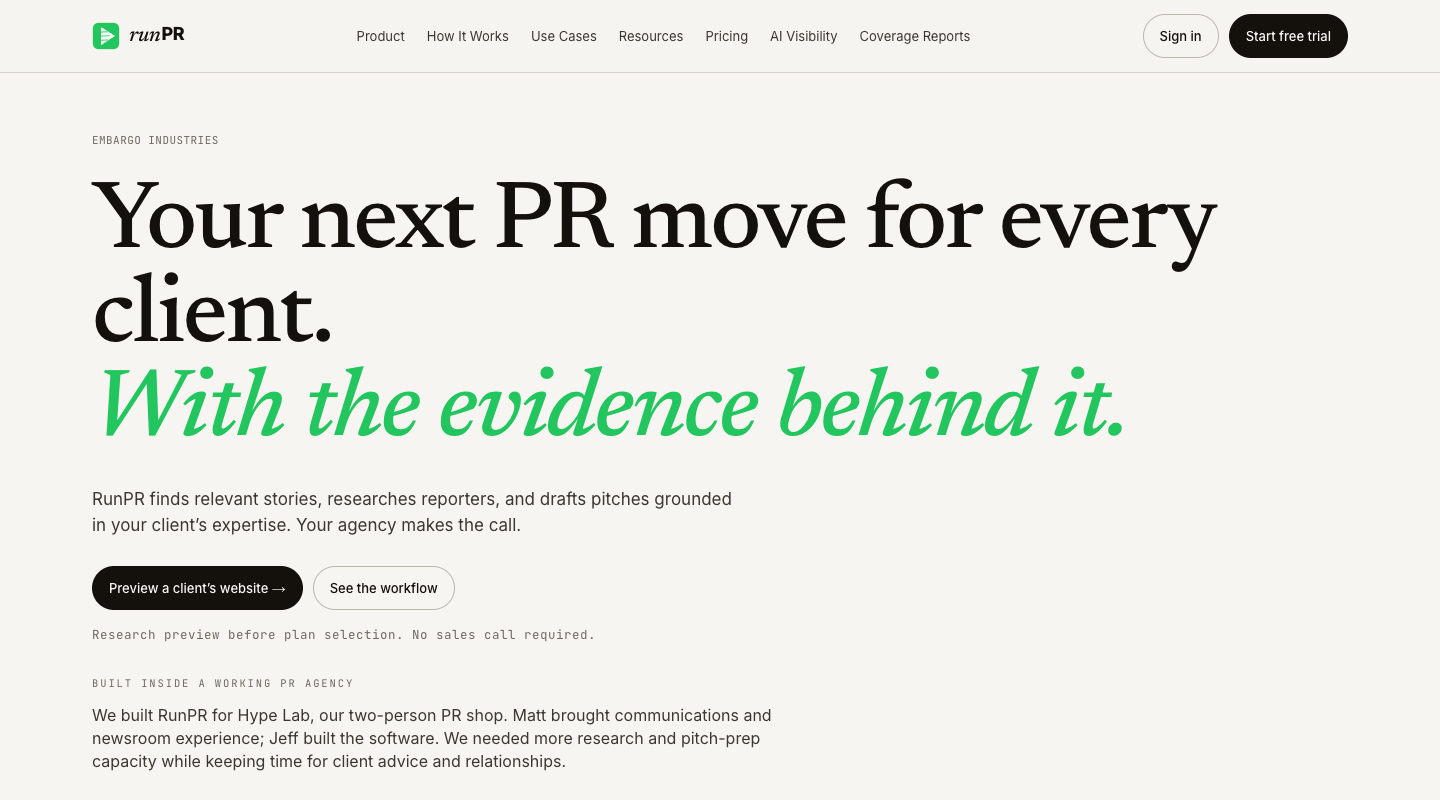
I built RunPR around the recurring work of deciding what to pitch next. A team can keep client context and voice alongside reporter research, draft pitches, review evidence and writing, and approve what it sends.
That connection matters when you manage several clients. You need to know which company a claim belongs to, which source supports it, and whether the recipient covers the topic. Generating another email is only one part of that job.
The Solo plan costs $149/month for up to two client Accounts and 250 AI-written pitches in a shared monthly pool. Studio costs $599/month for seven client Accounts; Agency costs $1,499/month for 15. All paid plans include unlimited seats, while research, contact, monitoring, and scan allowances vary by plan. The seven-day, no-card trial includes one client and five AI-written drafts.
RunPR also includes AI Visibility. Keep that separate from a promise of search traffic: a sampled AI answer mentioning your company doesn't establish that someone visited your website or bought your product.
The tradeoff: You still need a credible story, source material, and someone responsible for reviewing the pitch. Draft allowances measure capacity, not coverage earned. I'd use the trial with a real client brief and judge how much useful work survives your review.
Semrush AI PR Toolkit: for media discovery and outreach with an AI-visibility angle
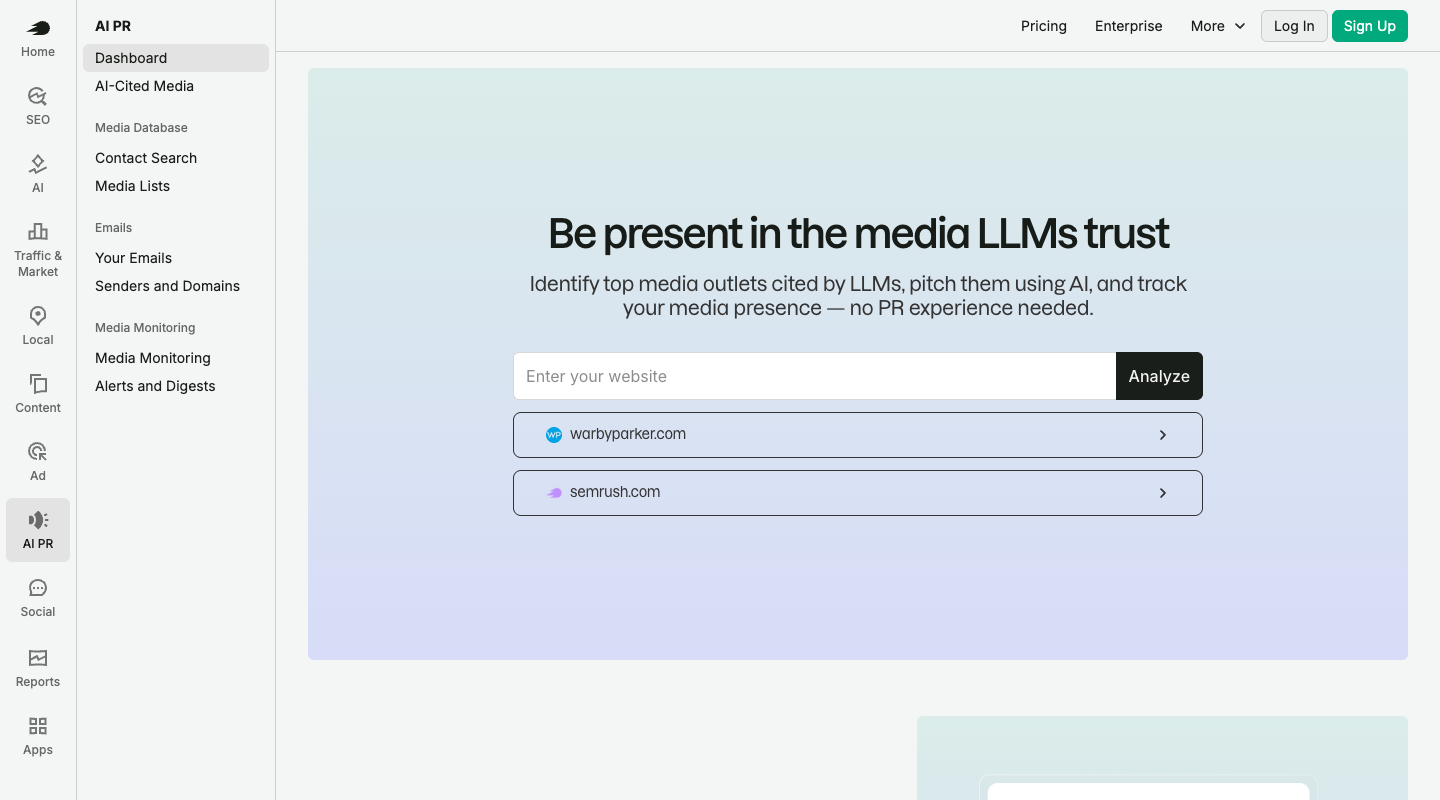
Semrush AI PR Toolkit combines journalist research and targeted email campaigns with discovery of media outlets cited by large language models.
Its published plans make the distinctions worth reading. Base is $149/month for media discovery, lists, and targeted campaigns. Pro is $279/month and adds follow-ups, more detailed campaign analysis, weekly AI-cited media updates, and media coverage monitoring. Business is $499/month and adds competitor tracking and broader visibility comparisons.
That gives you a specific buying question: do you need help finding outlets and contacting journalists, or do you also need the monitoring and follow-up features? Budget for the tier you'll use rather than comparing starting prices alone.
The tradeoff: The seven-day trial restricts some functions, including email sending, contact viewing and export, and email performance statistics. Plan your evaluation around those limits. An outlet appearing in AI-citation research also doesn't mean its journalists will cover your company or that a resulting article will produce an AI recommendation.
Muck Rack: for a broader media-relations evaluation
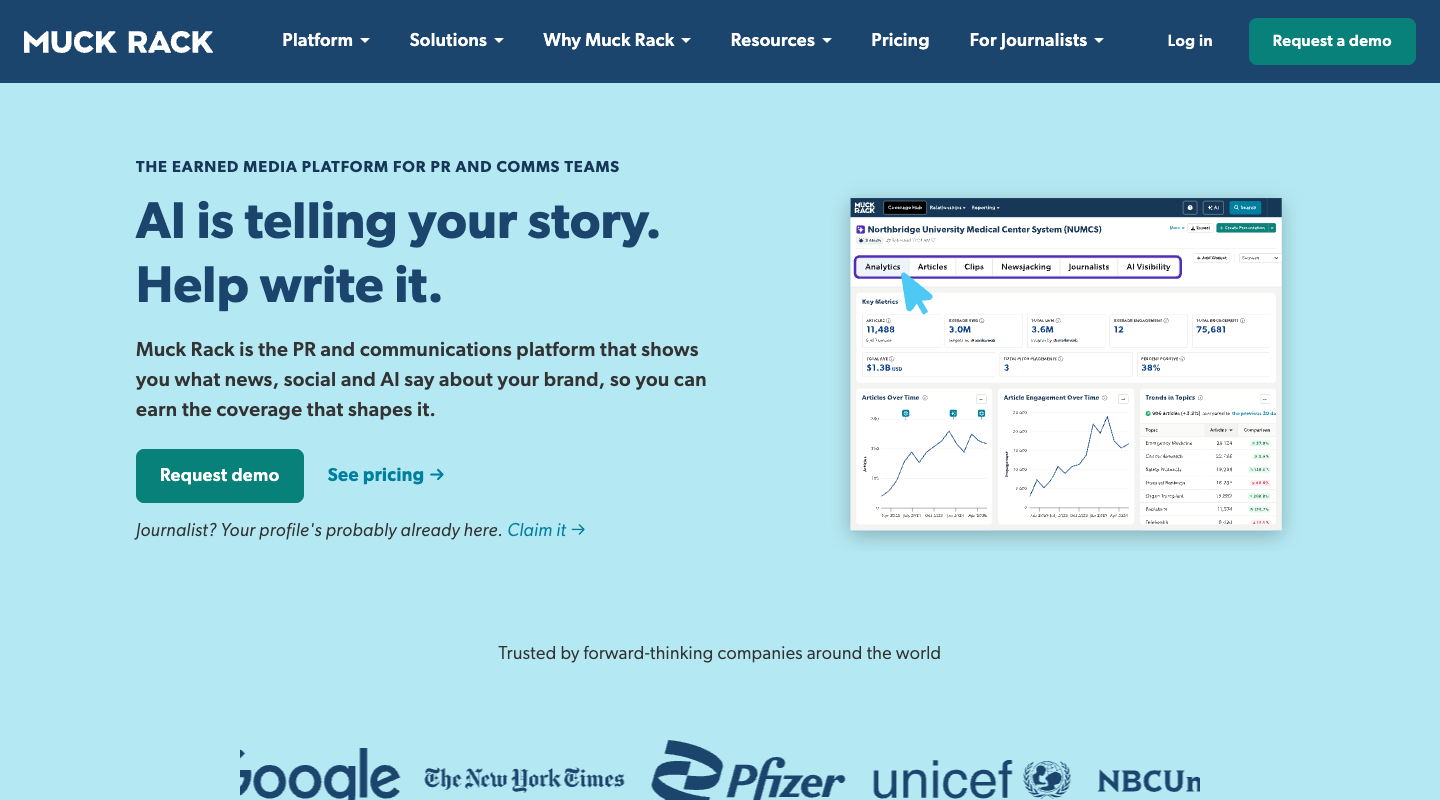
Muck Rack offers journalist and outlet research, pitching, monitoring, and measurement across its plans. Its pricing depends on your team, including the number of users, and requires a proposal.
I'd put it on the demo list if your team wants to evaluate those functions together and has enough ongoing media-relations work to justify a more involved buying process. Bring your own examples: five reporters you know, a niche topic you monitor, and a client report you need to deliver.
The tradeoff: A custom quote makes a quick price comparison difficult. Ask for the total cost at your actual seat count, the contract term, and the coverage sources included. Muck Rack lists print and broadcast monitoring among its add-ons; make those requirements explicit if they're important to your clients.
PR.co: for a newsroom and publishing workflow
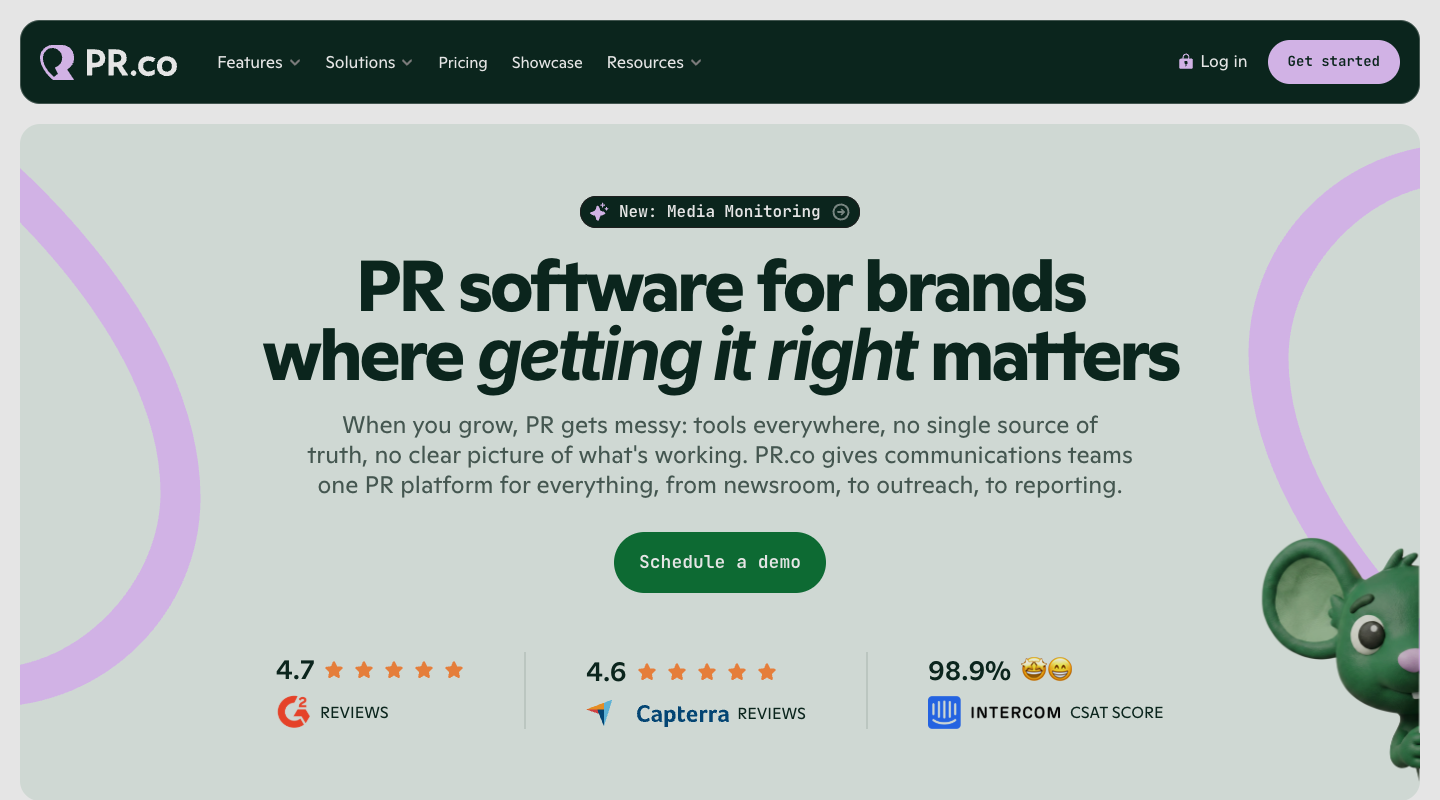
PR.co is worth considering when reporters need a better place to find your company's announcements and assets, and your team needs a structured way to publish them.
Its Start plan includes an online newsroom, a PR CMS, digital asset management, contact management, and email capabilities. Higher tiers add collaboration and approval features, localization options, and more extensive customization. The current pricing page asks buyers to request a quote.
The tradeoff: Media monitoring is a subscription add-on. PR.co says Start is available monthly, while Scale and Enterprise require annual subscriptions with the option to pay monthly. Check the commitment as well as the payment schedule. For a small team that needs only a page of press assets, compare the quoted package with what you can maintain in your existing website.
Google Alerts: for a lightweight monitoring starting point
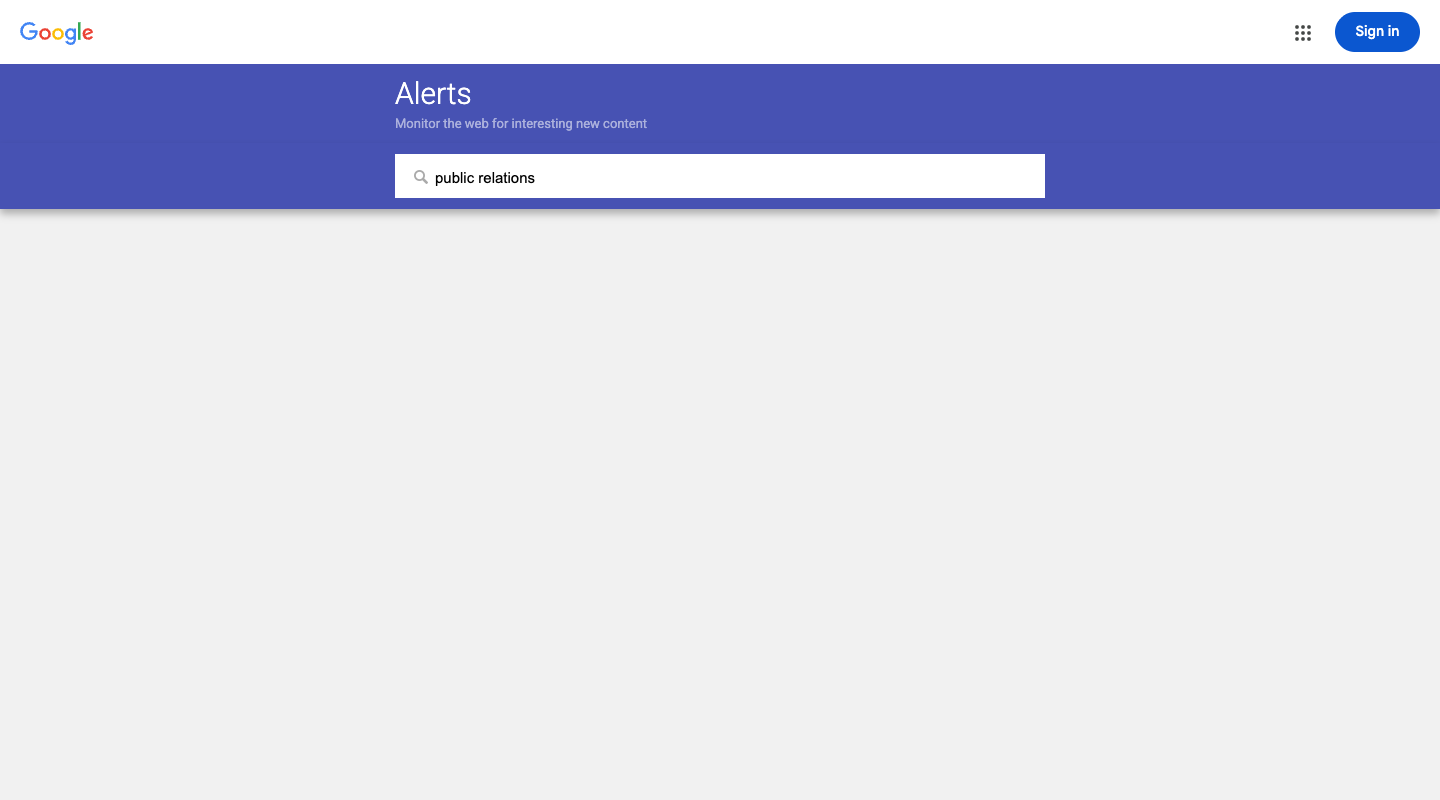
Google Alerts lets you receive emails when new matching results appear in Google Search. Google's setup guide covers controls for frequency, source types, language, region, and result volume.
Try alerts for your company, a spokesperson, and a narrow industry topic. Review the results for a week before deciding you need a larger monitoring subscription.
The tradeoff: An alert about a search result gives you a starting point for review. It doesn't establish comprehensive coverage, tell you whether a mention matters, or produce a client-ready account of your PR work. You'll need a separate process for those tasks.
Run the same small evaluation before you buy
Give each candidate the same assignment. Choose one client, one story idea, and a handful of reporters whose work you can assess.
- Check relevance. Read the journalists' recent work. Count useful matches rather than the total names returned.
- Inspect a draft. Trace its factual claims to sources and count the changes you'd need before sending.
- Test the handoff. Have a teammate review it. Check whether they can find the supporting material and understand what needs a decision.
- Inspect the report. Separate coverage, estimated reach, email activity, referral traffic, and business outcomes. Ask how each metric is collected.
- Price your workload. Include client Accounts, seats, contact access, monitoring, and any annual commitment.
For a small agency that needs help turning client research into reviewed pitches, I'd start by trying RunPR. If media discovery and AI-citation research are your immediate priorities, compare Semrush's relevant tier. Put Muck Rack on your demo list for a broader media-relations evaluation, and PR.co on it if publishing and a newsroom are central to the job.
If your immediate need is just to watch a few topics, begin with Google Alerts and a shared document. You can make a better purchase once you've identified the work your team can't keep up with.